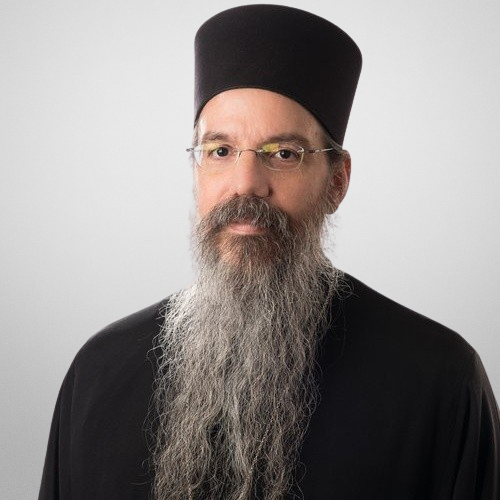
St. Basil the Great: Life, Writings, and Legacy
St. Basil the Great (born around 330; died 379) was the fourth‑century Bishop of Caesarea, a Cappadocian theologian, monastic legislator, liturgist, and pioneer of organized charity. His sermons, letters, Hexaemeron, ascetic corpora, and Eucharistic anaphora deeply shaped Orthodox theology, worship, and monastic formation. Grounded in the Cappadocian Fathers and liturgical tradition, his pastoral example offers practical guidance for communal prayer, ethical life, and care for the poor.
Note: This article is an automatically generated transcript of an audio lecture. It was transcribed and lightly reworded for readability using automated tools, so it does not reproduce the speaker’s exact words. For the original, listen to the recording linked below.
Listen to the original lecture on Patristic Nectar →
Key takeaways:
- Bishop of Caesarea whose theology helped shape the Trinitarian settlement
- Architect of Basilian monastic rules that standardized Orthodox communal life
- Prolific author of sermons, letters, Hexaemeron, ascetical corpora, and prayers
- Champion of liturgy and chant and author of a major Eucharistic Anaphora
- Pioneer of organized charitable institutions often seen as precursors to hospitals
Who St. Basil was
Basil of Caesarea was called "the Great" by people already in his lifetime. His best friend, Gregory the Theologian, made this title official in his very famous funeral oration for St. Basil, delivered perhaps a year or two after St. Basil's death.
As most of you will know, Basil lived in the fourth century, a formative period for the Church; he was born around 330 and died in the year 379. His memory is celebrated on January 1st, and he is commemorated again with St. Gregory the Theologian and St. John Chrysostom on January 30th, the Feast of the Three Hierarchs.
He came from a family of ten children, and four of his siblings are also saints: St. Gregory of Nyssa, St. Macrina, St. Naucratius, and St. Peter of Sevastia. On December 1st, 1998, the Patriarch of Constantinople canonized St. Basil's mother, Emmelia, who is now also commemorated on January 1st.
Basil's name, to engage in a little bit of Greek etymology, means king. The modern Greek word for king is βασιλεύς; the older form of the word is likewise βασιλεύς. Many people know that, but fewer people know how the word βασιλεύς breaks down in Greek. It stems from two words: βάσις, in which you can hear the English word base or basis, and λαός. So the king, the βασιλεύς, is the βάσις of the λαός. Λαός is the Greek word for people.
It's interesting that he has this royal kind of name, this kingly name, because in his own way he was certainly the foundation and the basis of the people of his home church in Asia Minor, but also for thousands and thousands of Orthodox Christians ever since.
Early life, family, and education
Basil was born probably around the year 330 in the city of Caesarea in Asia Minor. He was born into a large, respectable, and wealthy Christian family. It is a little-known fact that, as an infant, he was not raised by his mother. We're not sure why; she might have been ill after childbirth or unable to nurse him. He was probably sent to distant relatives, not too far from the family home, and was raised by a woman who was not his mother, whom he always remembered and always thought kindly of.
His family was deeply Christian. His grandparents were persecuted for a ten-year period by the pagan Roman Emperor Maximinus Daia. From being upper-class aristocrats, they were forced to live on and off in the forests and woods for ten years. This is something that Basil was quite proud of.
At about the age of 16 he began his studies in Caesarea, around 346 to 348. This is where he met St. Gregory the Theologian, also known as Gregory Nazianzus.
A couple of years later, in 348 to 349, he was still at school but now in Constantinople, the rising world center because it had become the new home of the Roman Emperor.
From 349 to 355 he relocated to Athens, where he studied with his friend St. Gregory. The Emperor Julian was also a student at the University of Athens at that time. No one then knew what would happen in his career after that, and Gregory the Theologian, again in his funeral oration, has much to say about their student years together at Athens. One memorable phrase he uses is that as students he and Basil "knew two ways": one path led to the school, and the other way led to the church. This indicates their life being devoted both to study and to Christian life.
Family's turn to asceticism and Basil's conversion
Around this time Basil's family at home began to turn to a life of asceticism under the influence of a charismatic ascetic elder, Eustathius of Sevastia, who came from the region around Armenia. So taken was the family by this new kind of spiritual elder that, after Basil's father's death, his mother and eldest sister Macrina converted their home into a convent; the serving women became the nuns under the authority of Basil's mother and Macrina.
There is evidence that Basil was kept abreast of these developments and became increasingly excited about what was happening at home with his family. This is often said to be one of the reasons why he left his studies early to go back and join this ascetic movement, which at the time was sweeping much of the Christian world, not just in Egypt or Palestine, but also in Asia Minor.
He returned to Caesarea at about 355 or 356 and began a career in rhetoric, which covered a lot of ground in the late antique world: politics, legal work, public speaking, and the like. It is here that what I like to think of as his conversion occurred. His older sister Macrina seems to have had a hand in this, but Basil himself describes it in a rare autobiographical moment in letter 223.
He tells us that at a specific moment his eyes were opened and he beheld what he calls "the wondrous light of the gospel." He also realized, not unlike the story of St. Anthony, that the quickest road to perfection was in the self-dispossession of one's goods: selling property, giving to the poor, and living without those kinds of cares. He also sensed the need for a spiritual guide, a spiritual teacher in this new way of life; this person seems to have been Eustathius of Sevastia.
Travel, baptism, and monastic life
When Basil returned to Caesarea, Eustathius was nowhere to be found; he had apparently left to tour monasteries in Palestine and perhaps Egypt. In search of his teacher, Basil traveled south through Syria, passed through Palestine, and spent some time in Egypt seeking this world-renowned charismatic elder. The journey was a fact-finding mission into the state of asceticism and monastic life across the Mediterranean world.
Such extensive travel was unusual and proved extremely important several years later when Basil himself entered monastic life and then began to reorganize it along what he, and ultimately the Church, regarded as healthier and more proper forms. He had seen many extreme situations and was troubled by the lack of uniformity in ascetic life.
After touring Syria, Palestine, and Egypt, he was baptized around 357–358 and then entered formal ascetic retreat somewhere on his wealthy family's vast properties in the mountains and forests of the Pontus region. He spent part of this time with his friend Gregory the Theologian, who had also returned from Athens; they lived together as co-ascetics, worshiping together and undertaking investigations into earlier Christian writings.
This was the time when Gregory and Basil produced what is known as the Cappadocian Philokalia — not the eighteenth-century Philokalia published by Saint Nicodemus and Saint Macarius. It has the same name but different contents. The anthology was based on the writings of Origen; Basil and Gregory read multiple works by Origen, extracted passages, and assembled them into this Cappadocian Philokalia.
Origen, synod attendance, and anti-Arian agitation
The Cappadocian Philokalia is instructive because, when one re-embeds the extracts in Origen's original context, one can see where Basil and Gregory began or stopped an excerpt; they ceaselessly avoided the passages where Origen became theologically dubious. There was much in Origen's writings that was valuable and needed preservation or retrieval, even though other of his ideas were condemned by multiple councils.
Shortly after this, St. Basil attended a synod in Constantinople that ended with the consecration of the old Church of Hagia Sophia, the one built by Constantine rather than Justinian. We do not really know whether Basil went to the synod as an official or simply out of curiosity—to follow the work of the synod or to see the consecration of the famous church.
He was present at some sessions of the synod, which proved to be an Arian synod—actually Homoians—and Basil was scandalized to see priests and bishops assenting to this heretical doctrine, including his own local bishop, probably out of ignorance, as Basil liked to believe. Basil left the council and the synod in Constantinople, realizing there was a tremendous problem in the church and that the people tasked with addressing it seemed utterly incapable of doing so. This set Basil on the path of responding to the Trinitarian controversy.
Ordination, famine relief, and episcopacy
In 362 Basil was ordained to the priesthood. Within a year a misunderstanding with his ordaining bishop led Basil to leave town and return to his ascetic retreat. Eventually matters were patched up between them.
In 369 there was a great famine in Cappadocia. Basil was still a priest at the time, and his response to the needs of the starving population was a kind of practice run for the philanthropic work he would later do as bishop.
In 370 he was made Bishop of Caesarea. Around this time the traditional, perhaps legendary, encounter with Ephraim the Syrian is said to have taken place. Scholars doubt that it happened, but it is not impossible because Caesarea and Edessa were not terribly far apart.
Confrontations with civil authorities
In the winter of 371 or 372 there was the famous episode involving Emperor Valens that many have heard about. Before that, there had been a similar episode with Modestus, the Praetorian prefect. Both men were Arians, and both attempted to pressure St. Basil into renouncing his orthodoxy, but both failed.
Basil's responses to the Praetorian prefect made the man realize he was not going to get anywhere with this recalcitrant bishop. The experience with the Emperor, who was in town for Epiphany, was dramatic. Valens walked into the church intending to rebuke Basil, but he was so overcome by Basil's presence, the congregational singing, and the devotion he witnessed that at one point he almost passed out and had to be propped up by his entourage.
Gregory the Theologian's funeral oration is the major source for all of these stories. If one wants more detail, that is the place to go. Basil died on January 1st, 379.
Basil the prolific writer
Basil was a prolific writer. He is the author of over 300 letters that have survived—310 to be precise, though an older number used to be 365 because of the days-of-the-year mnemonic. Forty homilies or sermons survive; these are exegetical, festal, or moral in character. I count the nine homilies on creation as separate; these are collectively known as the Hexaemeron, Basil's famous commentary on the opening verses of Genesis on the creation of the world.
There are two very important dogmatic treatises on the Holy Spirit and an important anti-Arian treatise, Against Eunomius. Against Eunomius is now available in English; only recently a full-length English translation of the whole work was published, which makes it easier to teach Basil's most important Trinitarian work.
There is a larger work known by the Latin title Moralia, or the Ethics, a series of eighty questions and answers on ethical and moral issues.
Then there is a very large corpus of ascetic writings. The Small Asceticon consists of 203 questions and answers on ascetic-monastic community life; the Great Asceticon consists of 376 questions and answers. These are available in English translation, although not always in complete form; for example, one translation contains the first fifty-five questions, arguably the core of the collection.
Because Basil revised these ascetic corpora multiple times, they have multiple prologues—nine prologues in total—and the manuscript tradition is complicated. In Basil's own lifetime he produced around seven different versions of the smaller or great asceticon, which is why there are so many prologues.
Basil is also the author of a large number of prayers, most famously the Great Eucharistic Anaphora. There are also many writings attributed to him that are dubious or spurious; for example, a substantial commentary on Isaiah is ascribed to Basil and is available in English translation. It might have been drafted by Basil, or by a student or disciple, or by a school associated with him; the arguments are strong on both sides, so we should be careful about dismissing such works outright.
We can safely assume Basil gave more sermons and wrote more than what survives, but what has been preserved contains the best of his work.
Basil's standing in scholarship and renewed interest
I want to argue that Basil is a far more foundational figure for the Orthodox Church than has normally been recognized, not just by people in the church but also in the scholarly and academic community.
It used to be common to study the Cappadocians as a whole — Basil and the two Gregories — as having a shared Cappadocian theology. Around the 1970s and earlier, this idea of a uniform Cappadocian theology began to be unraveled. Scholars separated Basil from the two Gregories and studied each in isolation, arguing that a unified Cappadocian theology did not exist and was a kind of confessional fabrication.
When this happened, Basil was largely ignored, Gregory the Theologian was also largely ignored, and scholarly attention shifted to Gregory of Nyssa, who received the lion's share of academic attention. He appealed to modern scholars because his discourse could be made to fit various modernist agendas; he was slippery and vague on certain points and therefore easy to interpret in different ways. He remained the darling of modern patristic studies for several decades.
Saint Gregory Nazianzus, "the Theologian," was dismissed by some as little more than a popularizer — the great communicator of the views of Basil and Nyssa — but attention to him has fortunately increased in recent years. Basil too was largely ignored, but that has changed only in the last few years.
It is hard to believe that only in 2007 did the first English monograph on Basil's Trinitarian theology appear. Before then, in English there was no major treatment of Basil's Trinitarian theology, although European scholarship offered some French and German studies in the 1990s.
Since 2007, additional English books on the subject have appeared.
The same pattern held for Basil's ascetic writings: they were largely ignored until major studies in English appeared in 2000 and 2005 by Augustine Holmes and Anna Silvas. That paucity of translations and studies meant generations of students lacked access to Basil's corpus, but that is changing, and now, more and more, one can read his works in English.
Basil and the two Gregories
The unity of Cappadocian thought was minimized by modern scholarship, but Basil should not be removed from center stage. Basil was the senior member of the three; the two Gregories were younger and, especially in Gregory of Nyssa's case, more speculative.
The two Gregories had the leisure to pursue speculative theology because they did not carry the full-time pastoral and administrative burdens that Basil did.
Basil was the master and teacher of both Gregories. He raised Gregory of Nyssa and taught him everything he knew.
After Basil's premature death, Gregory of Nyssa continued many of Basil's projects. He explicitly states in the introduction to On the Making of Man that he is continuing the work of his brother Basil's Hexaemeron because Basil never got to the creation of man.
Two other works by Gregory of Nyssa, On the Soul and the Resurrection and The Life of Macrina, also speak openly about Gregory's commitment to preserving Basil's legacy.
If you think about Basil's ascetic writings, they are very practical: how to live together and organize community life. Gregory of Nyssa's ascetic writings are more mystical and speculative; he deepens the psychological and spiritual aspects of the way of life Basil propounded. The Gregories are not doing something entirely separate; they are deepening and continuing Basil's work.
The same holds for Basil's anti-Arian writings. Eunomius wrote a text that Basil answered with Against Eunomius. Eunomius then wrote another work in response, but Basil died before he could reply. Gregory then wrote twelve books refuting Eunomius, continuing Basil's work.
Basil orchestrated the episcopal appointments of both Gregories in his metropolis. Both Gregories were unhappy about being deployed in this way. Gregory the Theologian complained about being sent to a small, deserted outpost and reportedly did not take up the post he was sent to, describing it as a crossroads in the middle of nowhere.
Four pillars of Basil's legacy
Basil is a towering figure in the early church for at least four major reasons. First, he lived at a time of crisis: Arianism had broken out not long before he was born. The First Council of Nicaea took place a mere five years before his birth, and he spent his life struggling against Arianism. He went to his grave before he saw the crisis fully resolved, but it was Basil who brought about the resolution of the Arian crisis. Although he died before the Council of Constantinople in 381, that council vindicated his Trinitarian theology, and the Constantinopolitan creed adopted Basil's more moderate language for the divinity of the Spirit than the more explicit terminology the two Gregories preferred.
Second, he established the fundamental principles of ascetic and monastic life. The Orthodox Church does not have monastic orders as in the West; there is a unified form of monasticism. If one had to name it, it is Basilian. Novices in many monastic communities are encouraged to read Basil's ascetical writings early on because they are being initiated into a Basilian type of monastic community, a form that has persisted for centuries.
Third, he strongly promoted liturgy and liturgical music at a time when many in the monastic world opposed melodic chanting in churches. Basil was a champion of liturgical music and chant. I mentioned his Anaphora already. There is also a strong argument that the prayer to the Holy Spirit, "Heavenly King, Comforter," if not written by Basil, is based closely on language from his writings on the Spirit.
Fourth, Basil's extraordinary commitment to social welfare and philanthropy led, and this is not an exaggeration, almost single-handedly to the invention of the Western institution of the hospital. There were no hospitals in the ancient Greek world; healing often took place in temples of Asclepius through incubation: one would sacrifice and spend the night in the temple hoping for a curative dream. The sort of institutionalized charitable care we associate with hospitals was essentially pioneered by Basil.
Why read the church fathers
Why study the church fathers? One simple reason is that the fathers are saints — people so thoroughly transformed by God's grace that Christ dwells in them. I am thinking of a passage from St. Maximus the Confessor writing about St. Gregory the Theologian and St. Dionysius the Areopagite:
"They received within themselves all the outpouring of wisdom that can truly be attained by the saints."
St. Maximus continues:
"By setting aside a life conformed to nature, they occupied themselves with the substance of the soul, and so they took hold of the living, unique Christ. And to say what is even greater, Christ became the soul of their souls."
What an expression: the soul of their souls.
A recent saying attributed to St. Silouan the Athonite illustrates the point. When someone suggested he should live in a cave to pray more, he replied that he already lived in a cave:
"My body is a cave for my soul. And my soul is a cave for the Holy Spirit."
St. Maximus's point is that the living, unique Christ became the soul of their souls, manifest in their deeds, words, and thoughts. Their works were authored not by them but by Christ who, by grace, had exchanged places with them.
Somewhere, St. Isaac the Syrian says that "the virtuous man communicates grace to his listeners." Their words are filled with grace, which is why the writings of the fathers are luminous and life-giving for whoever wishes to read and receive them.
Authority of the fathers and final reflections
St. Gregory Palamas, in the second book of the Triads, puts the matter forcefully: "How could one who does not follow the teachings of the fathers be trustworthy? And how would such a person not reject the God of the fathers and the saints? For the Lord himself said, 'He who rejects you rejects me.' That is, he rejects the truth itself. And how could someone who is opposed to the truth be acceptable to those who are seeking the truth?" He is drawing on Luke 10:16, where Christ says, "He who rejects you rejects me."
To study the fathers is, on one level, to study Christ. It is to enter into the communion of the saints and to become part of a living tradition.
In most cases the gift of sanctity in the church fathers was woven together with outstanding intellectual ability, excellent education, and a deeply ethical and moral life. We see the best of human nature joined with the best God gives in these transformed lives.
In the case of the early fathers, and the great fourth-century fathers in particular, they were not simply present in the early period of Christianity but were the architects of the Church. Our theology, liturgy, hymnology, iconography, church architecture, spirituality, and canon law all have their roots in them. If we want to understand something, we should see it in its original form and go back to the sources that are the foundation of the Church.
Think about the achievements of the early fathers: St. John Chrysostom as an exegete, Basil as a monastic legislator. How could the teaching of one man become normative for the whole Church for all time? The only way that is remotely possible is through God. The authority the Fathers exercise in the Church is not because someone wrote a clever book but because they were sanctified and their teaching bears grace.
Just because someone holds an academic post or has a Ph.D. does not make that person an authority in the Church. Academic theologians and professors of theology, despite the good things some do, are not the Church's authority. Some may wish you to think otherwise, but most of us know better.